Times tables · free · no sign-up
Multiplication flash cards
Cards that remember which answers were hard, so tomorrow starts with those.
Multiplication flash cards online
The cards are dealt in your browser.
The three piles
- 0Not yet
- 0Nearly
- 0Know it
45 cards of this deck not seen yet. A Not yet card comes back after three others, and it is first in line next time.
The piles are kept in this browser only, with no account. Safari clears them after seven days without a visit. See them as a chart.
No magic in here
What the cards remember
The cards on this page do what a grown-up with a paper deck does at the kitchen table: the ones that went wrong come round again. There are three piles.
Not yet
It comes back after three other cards, and keeps coming until it is known. It also opens the next round, even if the second go went well.
Nearly
Known on the first go, once. One more first go like that and it moves up.
Know it
Known twice in a row. It is dealt last, and in a short round only when there is room for it.
One Not yet sends any card back to the first pile, wherever it was. The same piles color My chart on the multiplication chart: green for I knew it, red for Not yet. The test writes on the same chart.
To print · free, no sign-up
Printable multiplication flash cards: the 45
A full deck up to 10 × 10 has 100 cards. You don't need them. Take out the 1s, keep 3 × 8 and throw away 8 × 3, and 45 are left. That is nine cards a page and FIVE sheets of paper.
Each card belongs to the dragon of the table where a child first meets it, if you learn the tables in our order. So Clid, the dragon of 10, holds nine cards and Menny, the dragon of 9, holds ONE.
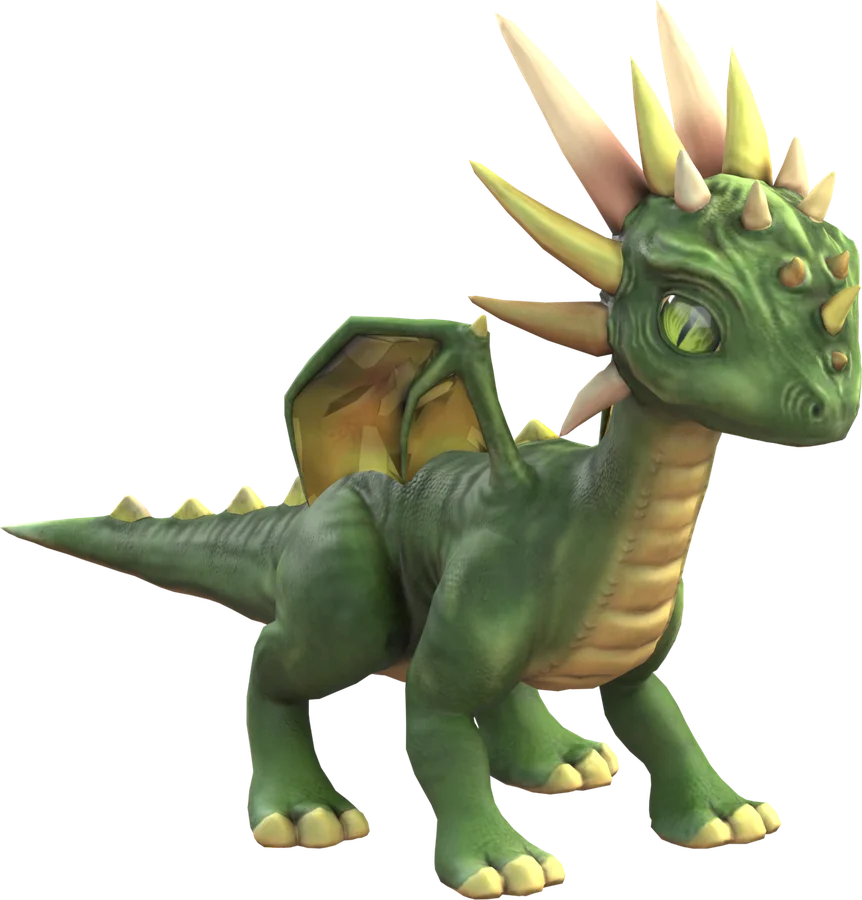 Clidthe 10s9 cards
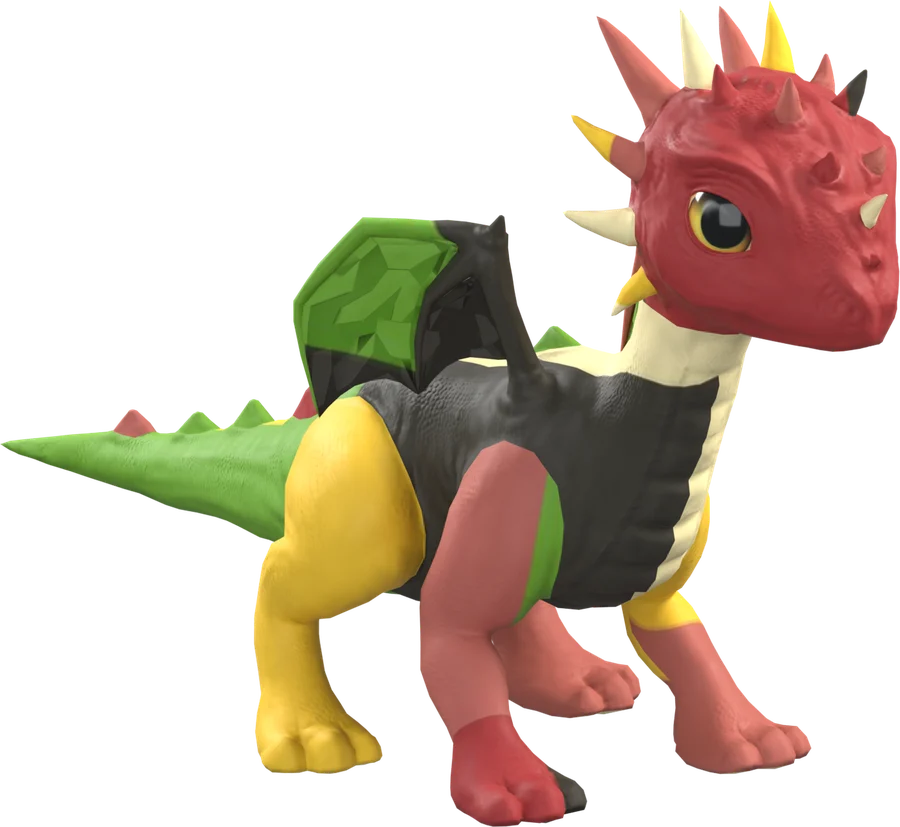 Pythathe 5s8 cards
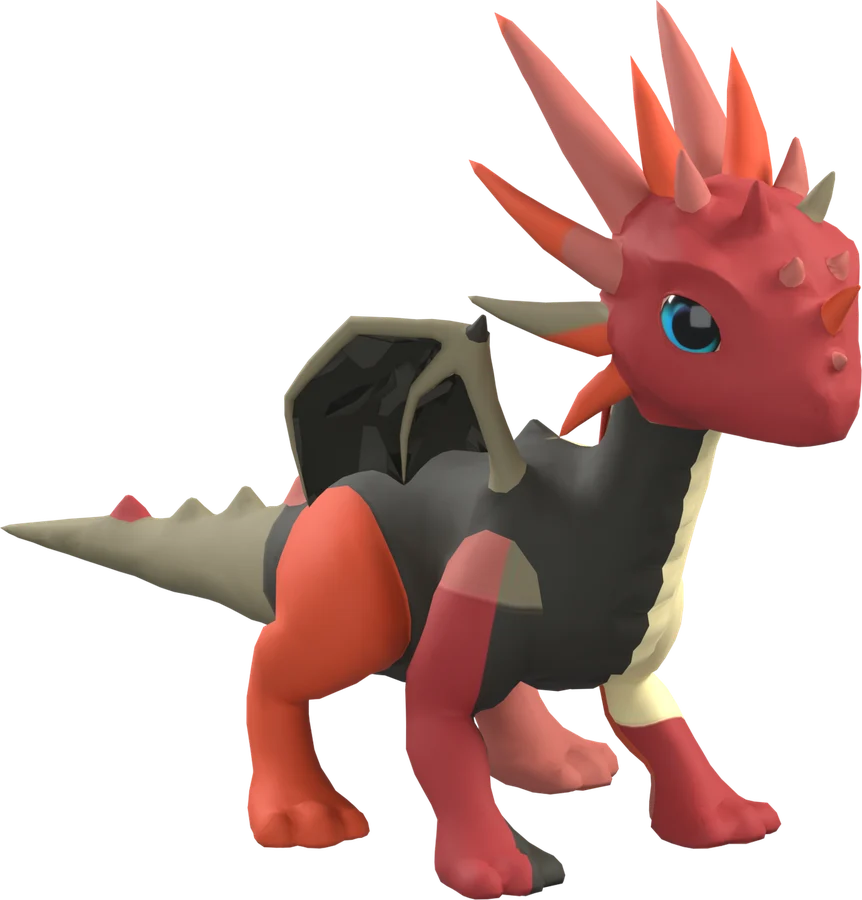 Diothe 2s7 cards
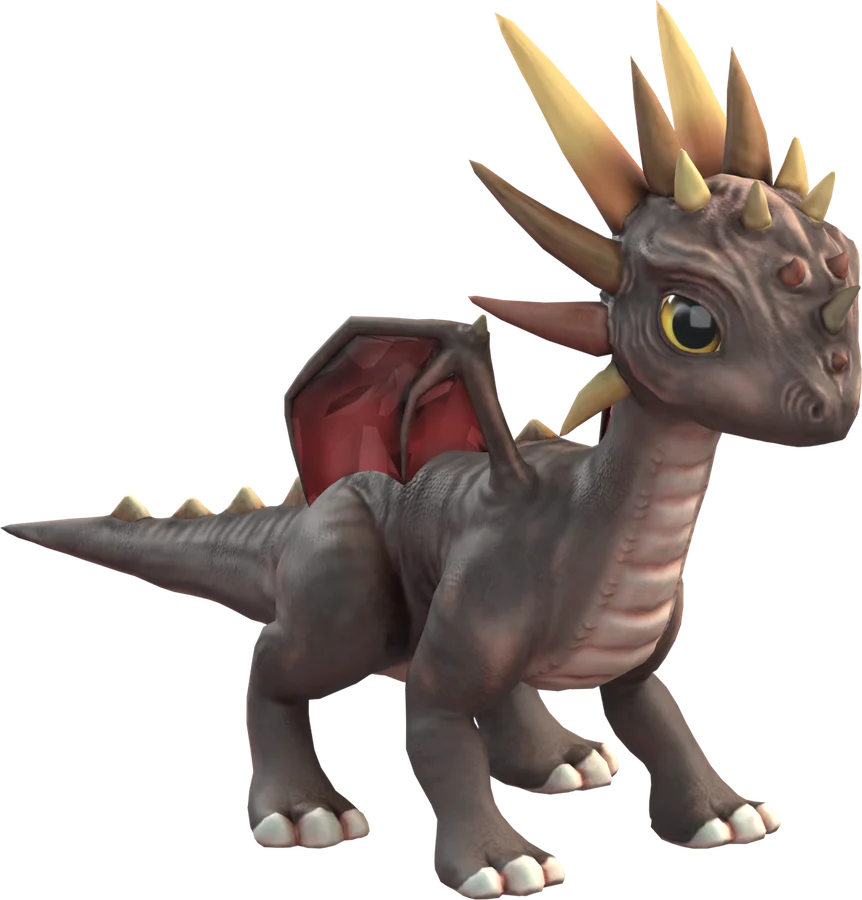 Thalesthe 4s6 cards
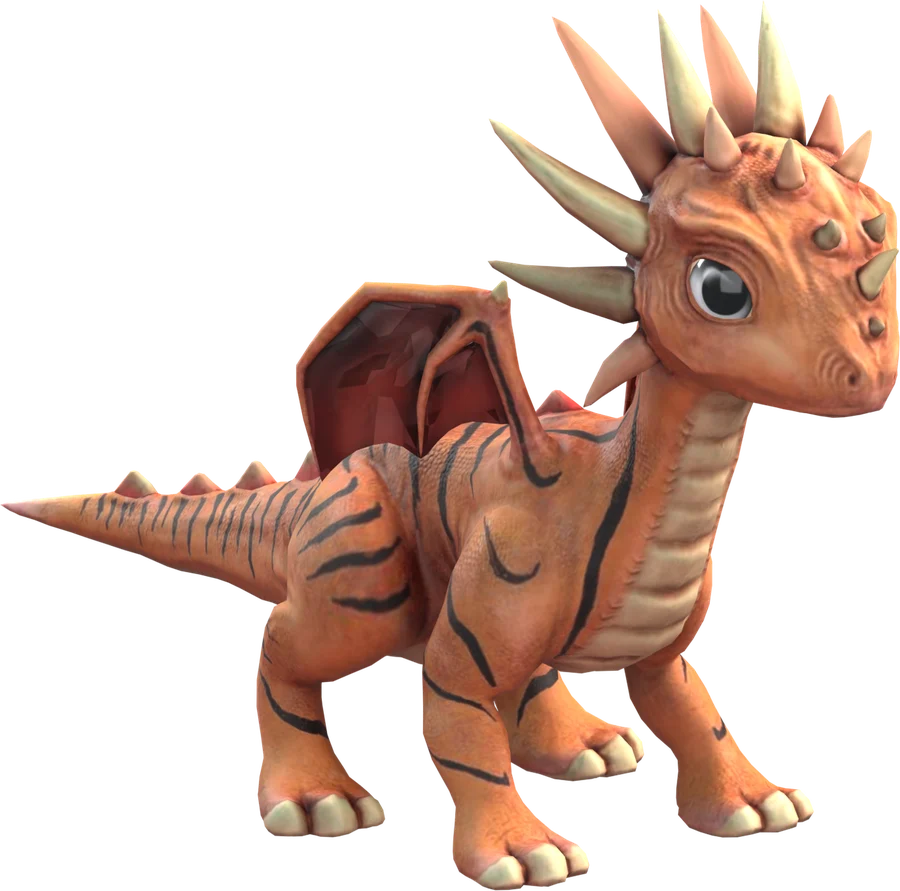 Hypatiathe 8s5 cards
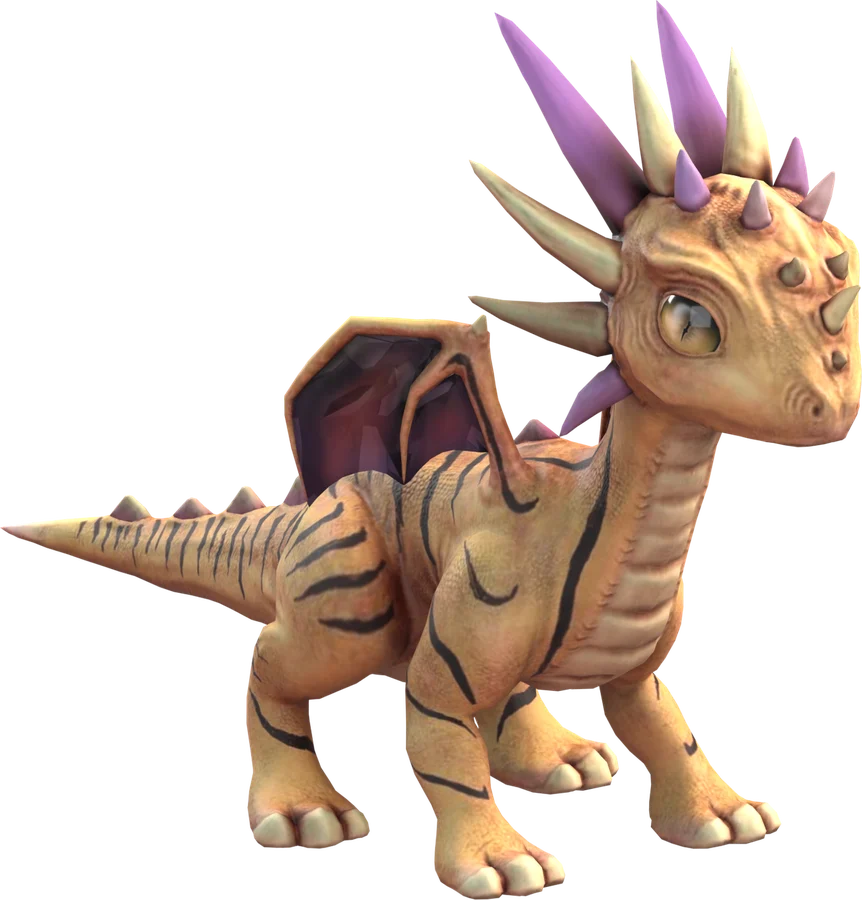 Aristhe 7s4 cards
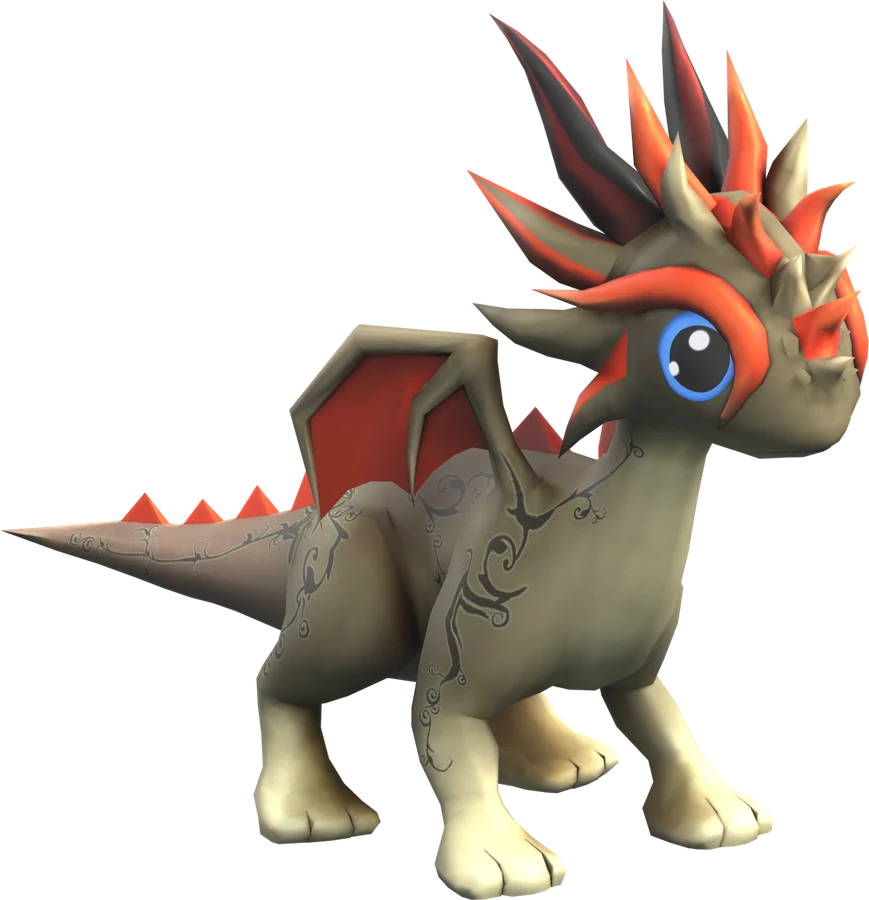 Eudothe 3s3 cards
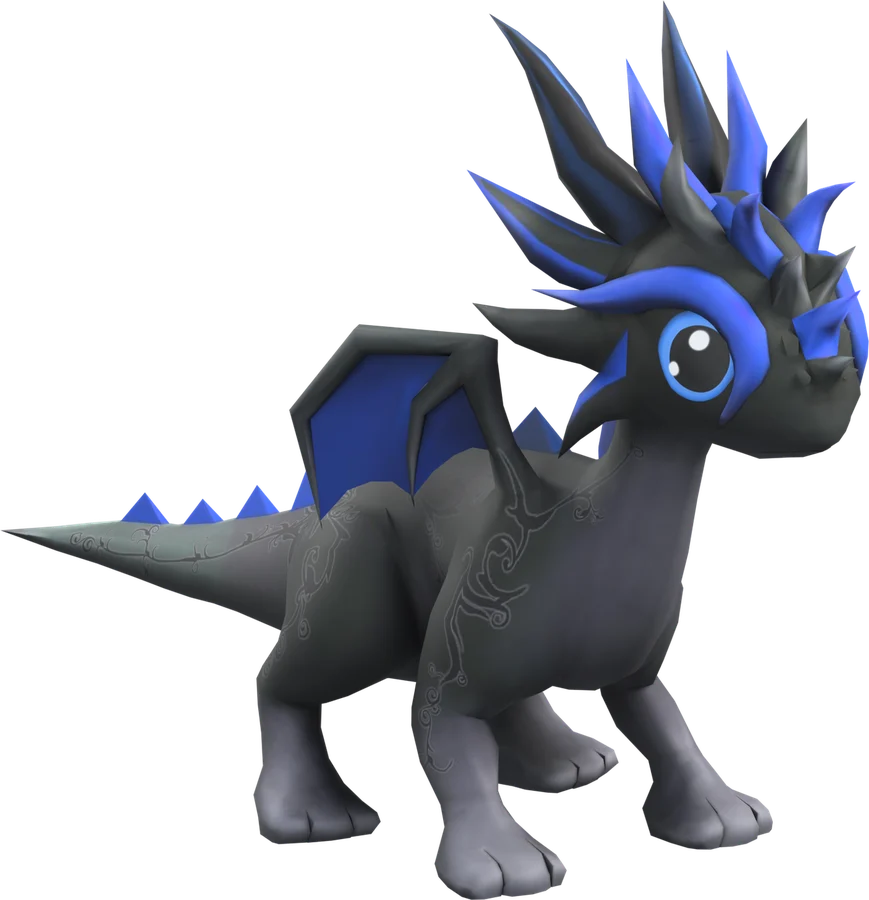 Platothe 6s2 cards
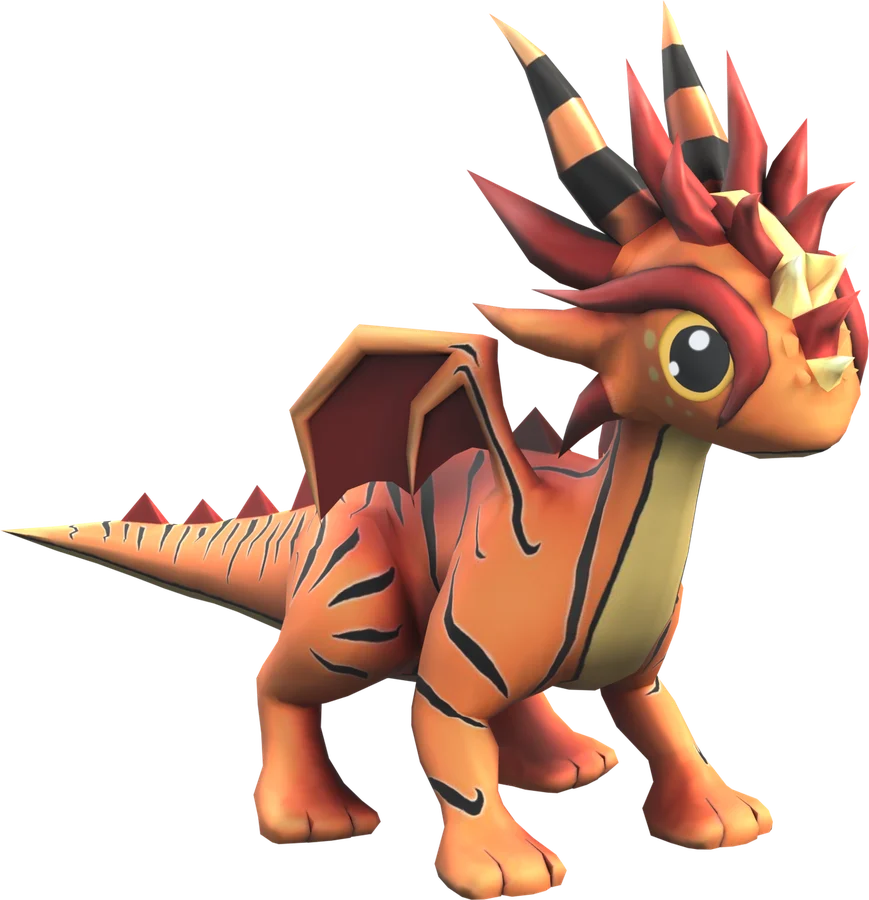 Mennythe 9s1 card
The front of a card is the sum. The back has the answer, the sum turned around (8 × 7 = 56 behind 7 × 8), the dragon's head, its name and the table's number. The number is there for sorting the cards, and because some of the dragons look alike.
Two sided
Print on both sides and choose "flip on long edge". The backs are mirrored, so every answer lands behind its own sum. Then cut along the gray lines. 5 sheets of paper.
Fold and glue
For a printer that prints one side. Each sum has its answer next to it: cut out the pair, fold it on the dotted line and glue it shut. 6 sheets. The cards come out a little smaller and twice as thick, which helps on thin paper.
The 45 facts deck
Forty-five cards, nine to a page. On the back of each one: the answer, the sum turned around, and the head and the name of the dragon whose table it belongs to.
PDF · two ways to print it
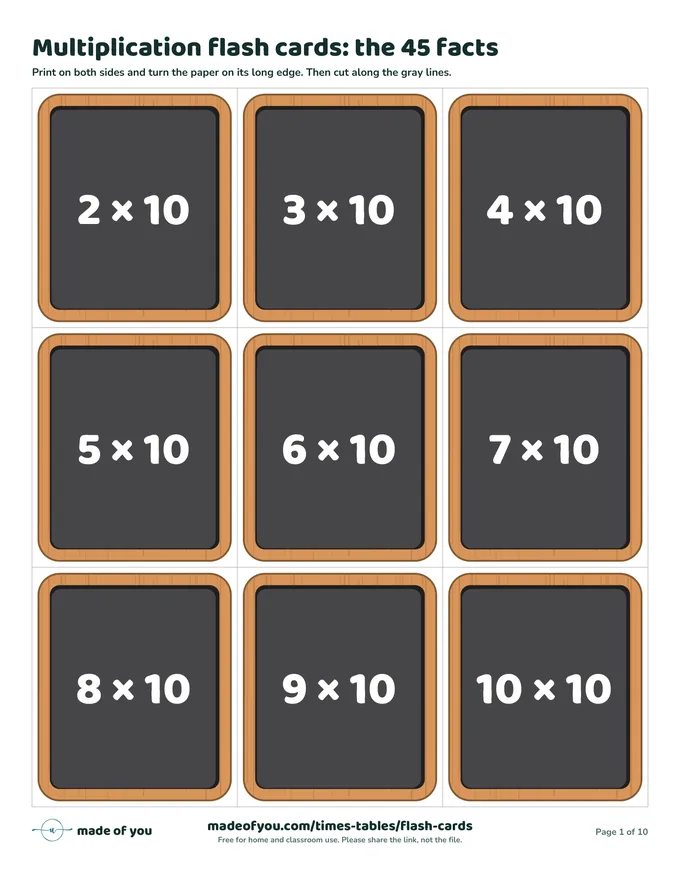
Free for home and classroom use. To pass them on, please share the link to this page and not the file.
One table at a time
Times tables flash cards for each table
Twelve cards for every table, from 1 × the number up to 12 × the number: one page of fronts and one page of backs. Both builds again, in US Letter and A4, black and white or color. The 1s and the 12s have no dragon, so their backs are plain, with the number only.
1 times table flash cardsPDF · two ways to print it
2 times table flash cardsPDF · two ways to print it
3 times table flash cardsPDF · two ways to print it
4 times table flash cardsPDF · two ways to print it
5 times table flash cardsPDF · two ways to print it
6 times table flash cardsPDF · two ways to print it
7 times table flash cardsPDF · two ways to print it
8 times table flash cardsPDF · two ways to print it
9 times table flash cardsPDF · two ways to print it
10 times table flash cardsPDF · two ways to print it
11 times table flash cardsPDF · two ways to print it
12 times table flash cardsPDF · two ways to print it
For one child, or two
Four games with the cards
The first three work with any deck from this page, and the first one is what the cards on the screen do. The last is for the 45.
1
Two piles
Show the sum, hear the answer, turn the card. Right goes on one pile, not yet on the other. Then go through the not yet pile again, and stop when it is empty. Two children can take turns holding the cards: the one who holds them sees every answer go by.
2
Stepping stones
Lay ten cards on the floor in a path, sums up, from the sofa to the door. A child may step on a card after saying its answer. Turn the card over to check. A wrong answer means one stone back.
3
Beat yesterday
Set a timer for one minute and count the cards that land on the right pile. Write the number down and stick it on the fridge. Tomorrow the game is to get one more.
4
Catch the dragons
Sort the 45 deck by the heads on the backs, then play one dragon's cards at a time, starting with the nine of the 10s. A dragon is caught when all its cards are right in one go. Menny, the dragon of 9, has ONE card, so save it for a bad day.
For games with dice, paper or a deck of playing cards, see multiplication games.
Questions
Grown-ups ask
- How do you use multiplication flash cards?
- Show the sum, let your child say the answer out loud, then turn the card. A right answer goes on one pile and a wrong or slow one on another. Go through the second pile again before you stop, and put those cards on top for tomorrow. The cards on this page sort themselves the same way.
- How many flash cards a day?
- A dozen is plenty. A round on this page is twelve cards unless you ask for more, and one table's printed deck is twelve cards too. We would rather see twelve cards every day than the whole deck on a Sunday. No study is behind that number. It is simply short enough to happen on a school night.
- Which flash cards should we start with?
- The nine cards of the 10s, then the 5s and the 2s. That is the order our book teaches the tables in (10, 5, 2, 4, 8, 7, 3, 6, 9, 11), and the 45 deck is printed in it: page 1 is the 10s. On the screen, choose "The 45" and the new cards arrive in the same order.
- Why does the deck have only 45 cards?
- Up to 10 × 10 there are 100 sums. Nineteen of them have a 1 in them, and the answer is the other number. Of the 81 that are left, 3 × 8 and 8 × 3 are the same fact, so one card does for both. That leaves 45. A deck that covered 0 to 12 both ways round would need 169 cards, which is 13 × 13. If your school goes to 12, add the decks of the 11s and the 12s.
- Do I need a printer that prints on both sides?
- No. Every deck comes in two builds. "Two sided" is for printing on both sides of the paper: choose "flip on long edge" and each answer lands behind its own sum. "Fold and glue" is for a printer that prints one side: the sum and its answer stand next to each other, you cut out the pair, fold it on the dotted line and glue it shut.
- What do the online flash cards remember about my child?
- Which pile each fact is on, how often it went right or wrong, and the day it was last answered. No name, no account, and nothing is sent to us: the piles are kept in your own browser, on the phone or tablet or laptop you are using. Safari clears them after seven days without a visit. You can empty them yourself with the link under the three piles.
- Do the cards read the answers aloud?
- Most of them. A child's voice says the whole fact when the card turns, for the tables from 2 to 11 up to ten times the number. Three kinds of card stay silent because nobody recorded them: 1 × 1, 11 × 11 and every card with a 12. The sound button switches the voice off.
Our own book
The book the cards go with
For grown-ups · it comes out in November 2026
A deck of cards can only ask. Our times tables book is the part that comes before the asking: every table has its own blackboard, the answers you already know stand in orange, and the book's tricks show a way to the hard ones. The 45 cards follow the same order, dragon by dragon, so you can read a table in the book and then take that dragon's cards out of the deck.
We don't make a boxed deck. The cards are free to print, right here, and the book is the thing we sell.
More times tables
- Times tables with dragonsTen tables, ten dragons, one free cube game.
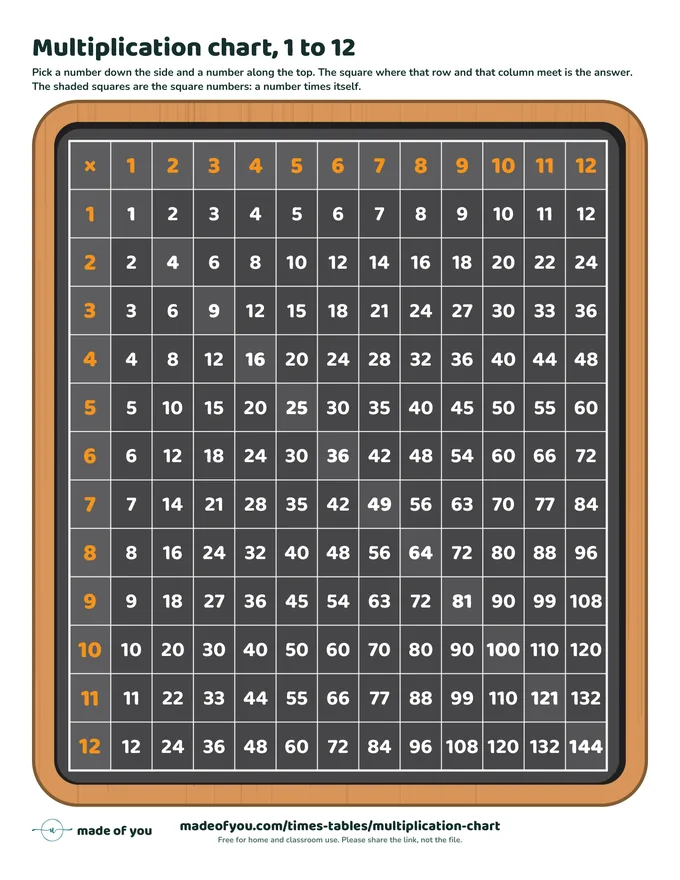 Multiplication chartTap a square to hear it, or print it
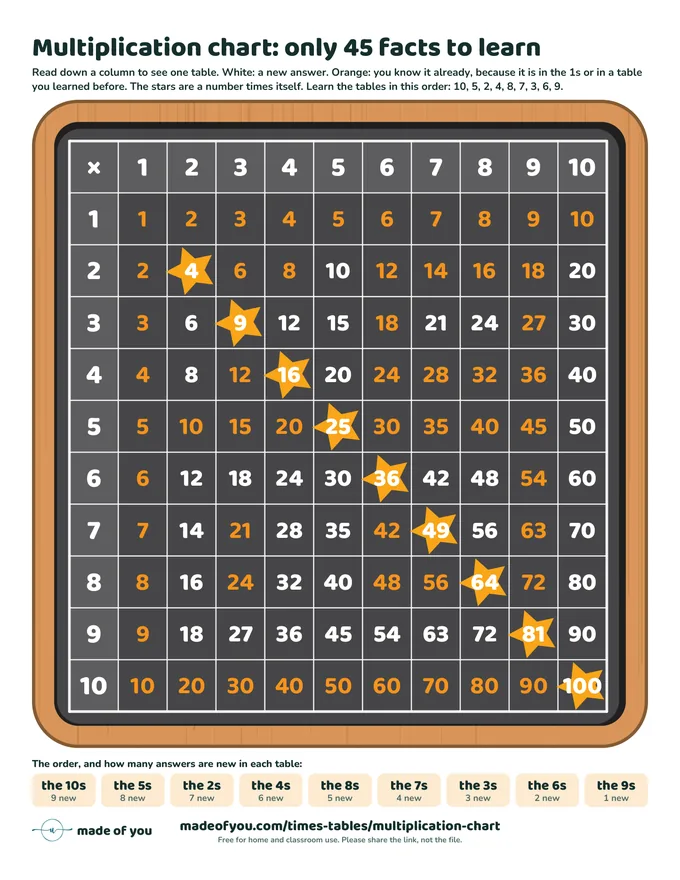 How to learn the times tablesOnly 45 facts, and the order to learn them in
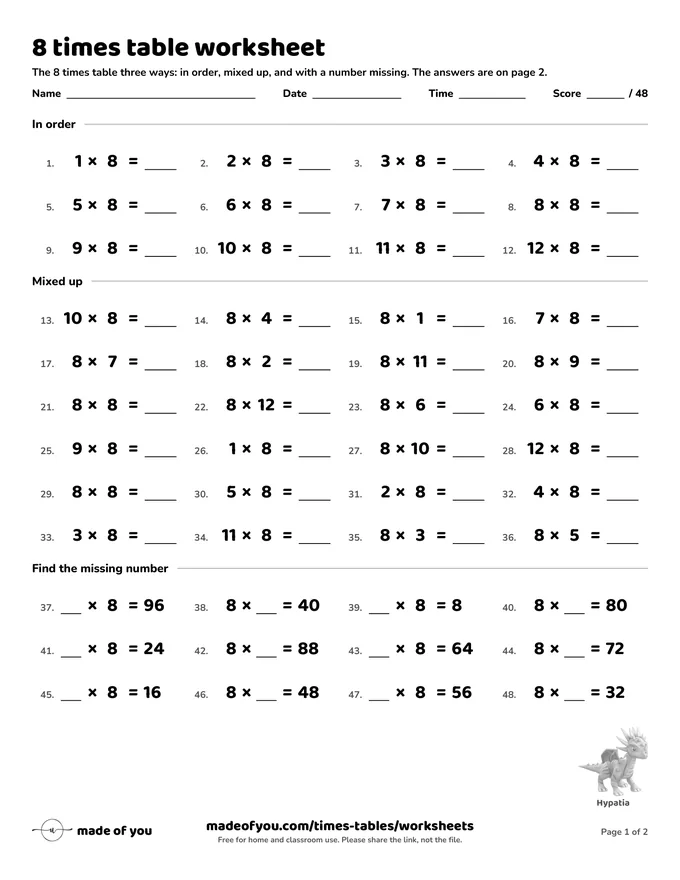 Times tables worksheetsMake a fresh sheet, or print a ready one
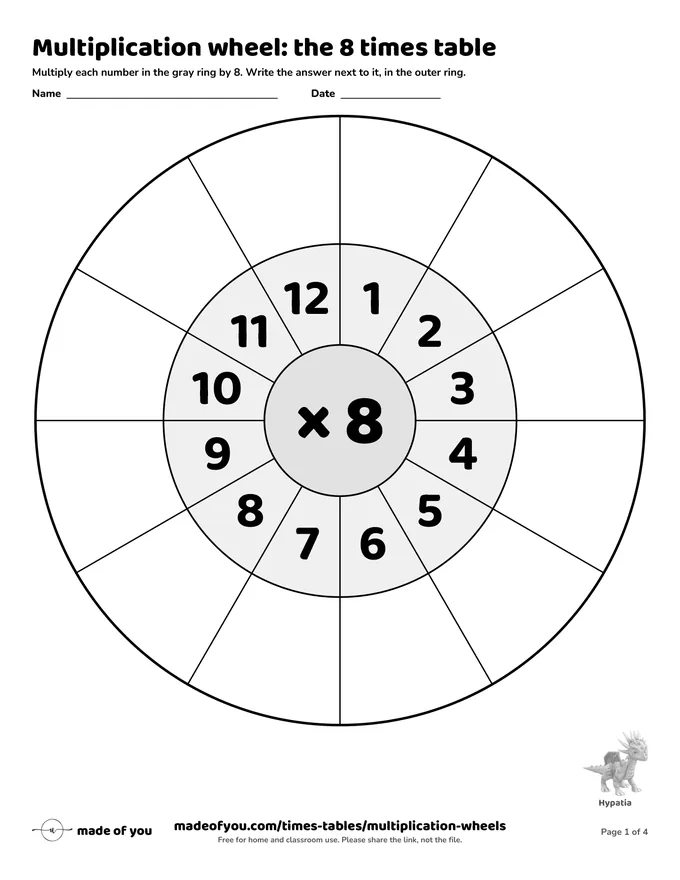 Multiplication wheelsFill one in on the page, or print the twelve
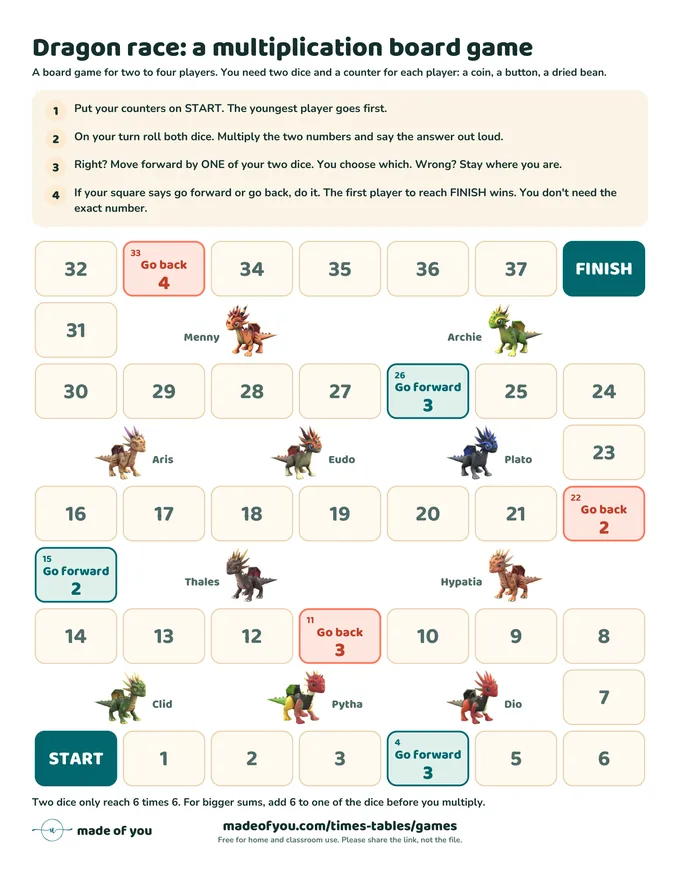 Multiplication gamesBingo, a board game, cards, dice and ten dragons
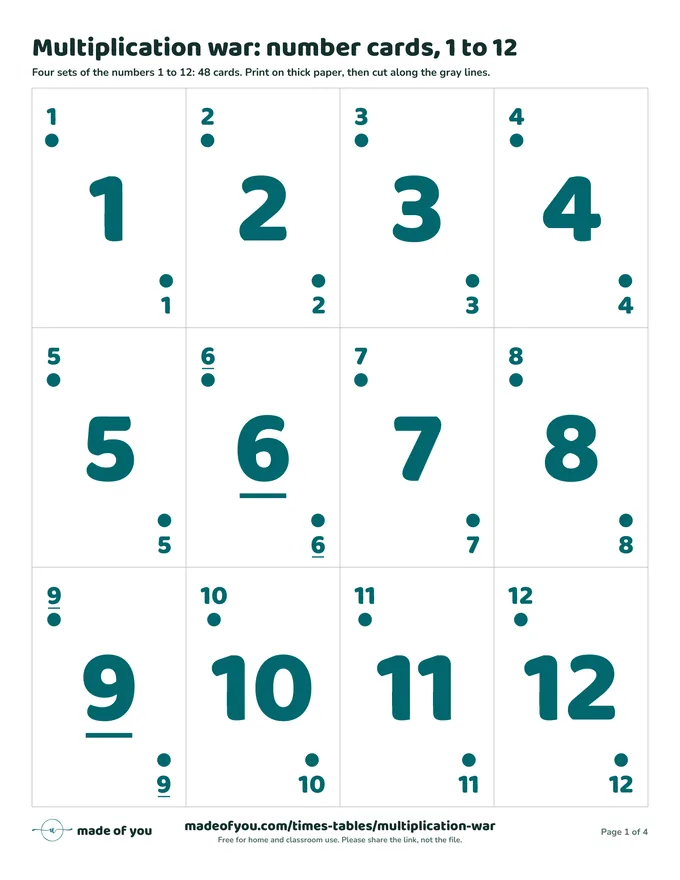 Multiplication warThe card game in six steps, with cards to print
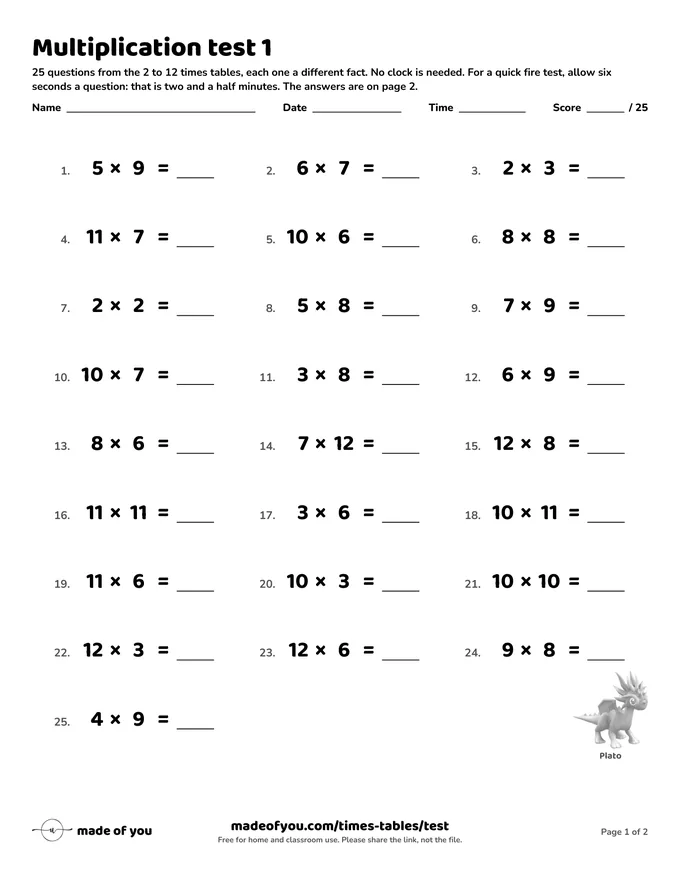 Times tables testTake your time or quick fire, then a chart of your own
 Multiplication tables checkA practice for the Year 4 check in England
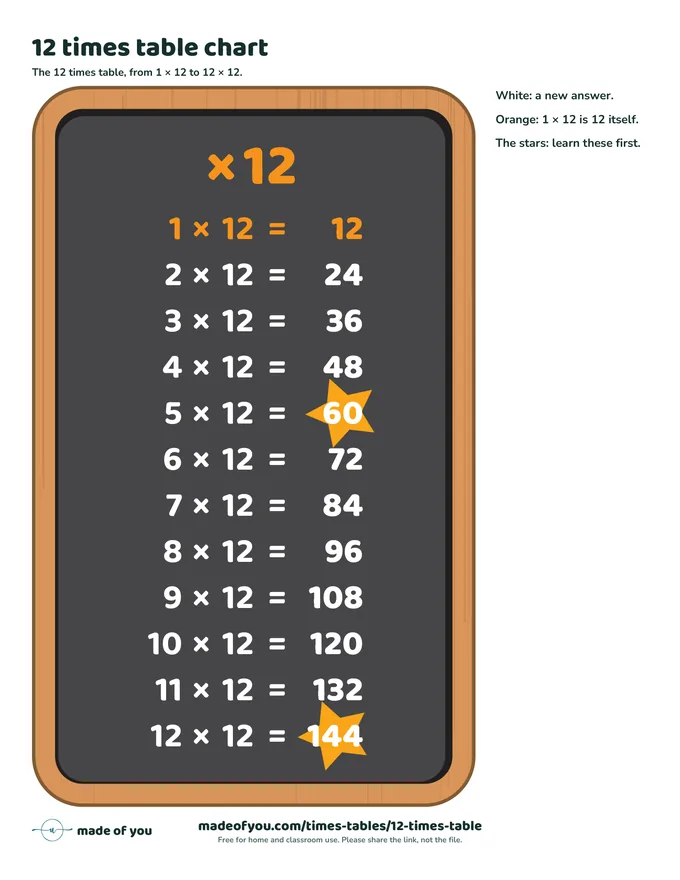 The 12 times tableTwelve rows, a tip, and sheets to print