Free breathing cards · ages 3 to 8
Breathing exercises for kids: breathe along with Foo
Here are eight slow breaths, each one 4 counts in and 6 counts out, and one you can play right here with Foo.
Play it here · about a minute and a half
Breathe with Foo
Turn the sound on, tap the button, then press Start. A gentle voice guides five slow breaths.
It plays on a phone or tablet or a computer, with nothing to install and no sign-up, and it never listens. For the whole screen, press the corner button in the frame.
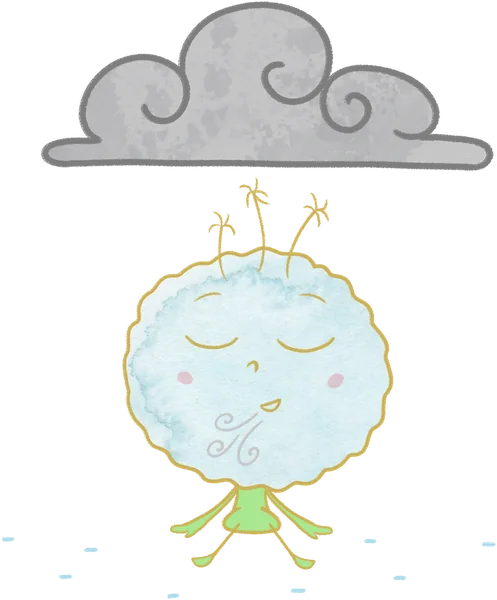
Open it on its own pageIt's the moment from our picture book Foo's Big Emotions when Foo hides in his tent with a big, dark cloud in his mind, and does something simple:
He started taking a few deep breaths. Each time he exhaled, Foo felt that somehow that big, dark cloud in his mind was becoming rain and releasing his sadness on the ground.
The quick answer
How to do a calm breath with your child
The same four steps work for every breath on this page.
Start on a calm day
Practice when everyone is fine, so the breath is ready for a hard moment. Sit comfy, like Foo in his tent.
Breathe in for 4
Slowly, through the nose if that's easy. Count on your fingers together: 1, 2, 3, 4.
Breathe out for 6
A little longer than the breath in, slow and gentle, like blowing a dandelion. Go straight from in to out, with no pause.
Stop after a few
Three to five breaths are plenty for a young child. Then ask: “Is your cloud a little smaller now?”
Sources: Child Mind Institute; Cedars-Sinai; Children's Hospital Colorado
Why a long breath out?
The Child Mind Institute teaches children to breathe in slowly and breathe out a little longer, picturing a balloon, as a simple way to relax the body. It can help some children feel calmer, and that is all we promise.
Print · free, no sign-up
The free breathing cards
All eight breaths on two pages, four cards to a page, with cut lines. Every card says it: breathe in 4, out 6. US Letter and A4, color and black and white, no email.
Every other free sheet, from the calm-down cards to the feelings chart, is on our calm-down ideas page.
Breathing cards
Eight guided breaths, each one 4 counts in and 6 counts out, from the rain-cloud breath to the starfish.
2 pages · PDF
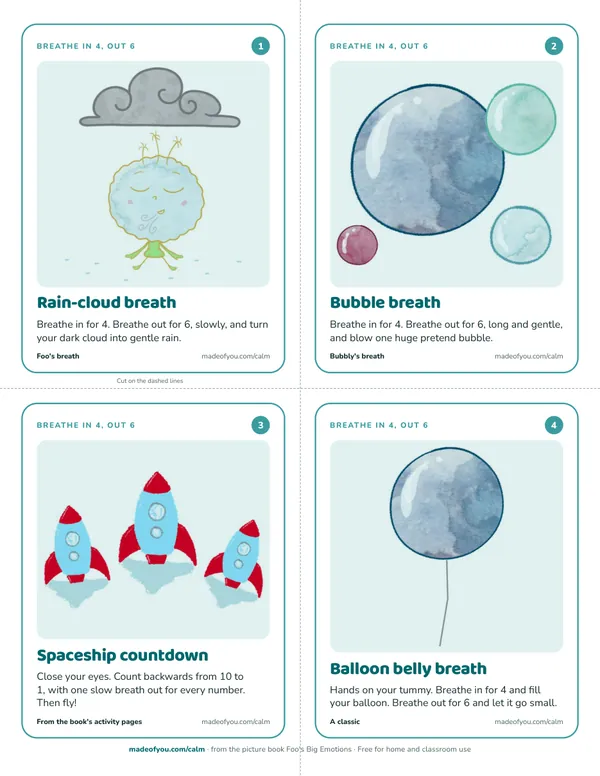
Free for home and classroom use. To pass them on, please share the link to this page and not the file.
8 calm breaths · ages 3 to 8
8 calm breaths to try with your child
Every one is guided: 4 counts in, 6 counts out, and no breath holding. Four belong to Foo, his friends and the book's activity pages, one follows Foo's rain, and three are classics from the Child Mind Institute and children's hospitals. Try one a day on calm days, then let your child pick a favorite for the hard moments.
1. Foo's breath
Rain-cloud breath
In 4 · out 6
Breathe in for 4. Breathe out for 6, slowly, and turn your dark cloud into gentle rain.

2. Bubbly's breath
Bubble breath
In 4 · out 6
Breathe in for 4. Breathe out for 6, long and gentle, and blow one huge pretend bubble.
Try it with Fooin the Calm Crew, on a phone or tablet
3. From the book's activity pages
Spaceship countdown
In 4 · out 6
Close your eyes. Count backwards from 10 to 1, with one slow breath out for every number. Then fly!

4. A classic
Balloon belly breath
In 4 · out 6
Hands on your tummy. Breathe in for 4 and fill your balloon. Breathe out for 6 and let it go small.
Where it comes from: Child Mind Institute
5. After Foo's rain
Rainbow breath
In 4 · out 6
After Foo's rain comes a rainbow. Trace it with your finger: breathe in as you go up, breathe out slowly as you come down.
6. A classic
Starfish breath
In 4 · out 6
Spread your hand like a starfish. Trace up a finger as you breathe in, and down the other side as you breathe out. Five fingers, five breaths.
Where it comes from: Cedars-Sinai

7. A classic
Smell the flower, blow out the candle
In 4 · out 6
Smell a flower: breathe in slowly through your nose. Blow out a candle: breathe out long and slow through your mouth.
Where it comes from: Children's Hospital Colorado
8. Fall's breath
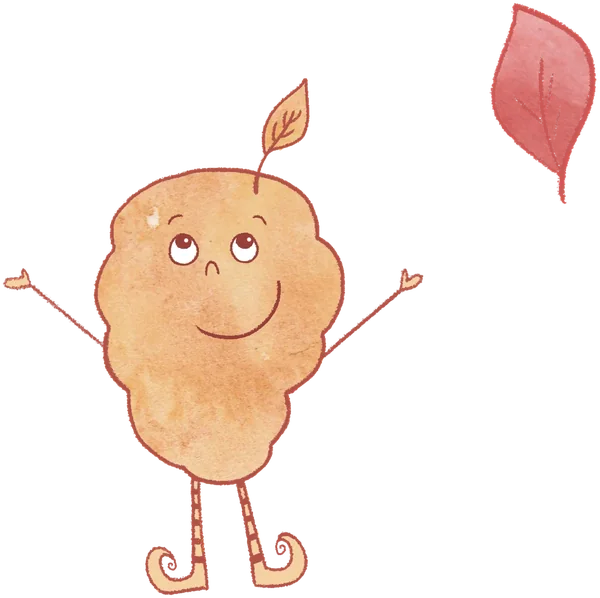
Follow the leaf down
In 4 · out 6
Watch a leaf float down from the top of a tree. Breathe in for 4, then breathe out slowly all the way until it lands.
Try it with Fooin Leaves in your room, on a phone or tablet
Watch · 33 seconds
Two slow breaths with Foo
A short look at Breathe with Foo: the same voice, the same music and two of its five breaths, in for 4 and out for 6. Watch it together first, or put it on the big screen for a class, then breathe along in the full version above.
It has captions, and the words on screen are the voice's own.
When to practice
Practice on calm days, use it on hard ones
The Child Mind Institute calls calming down a skill that can be taught, and a skill is easiest to learn when nothing is going wrong. So pick a calm moment: bedtime, after school, a wait in the car.
Then, on a hard day, the breath is already there. You only need to say “Let's do our rain-cloud breath” and start breathing yourself.
Three small tips
- Breathe along. Children learn to calm down through time with us, so go slowly and let your child copy you.
- Keep it short. Do a few breaths, then stop while it's still fun.
- Never force it. If your child doesn't want to, blow real bubbles, or watch Foo breathe and let them join in when they like.
What the research says
What we know about breathing and calm
Slow breathing is a standard tool for children, and an easy one to practice. Studies of mindfulness found small effects, so “it can help some children feel calmer” is as far as we go.
Slow belly breathing is a standard tool for children. The Child Mind Institute suggests breathing in slowly and out a little longer while picturing a balloon. Cedars-Sinai teaches belly breathing and five-finger breathing, and Children's Hospital Colorado teaches smelling the flower and blowing out the candles.
Child Mind Institute; Cedars-Sinai, 2023; Children's Hospital Colorado
Calming down is a skill, and it's learned on calm days. The Child Mind Institute calls calming down a skill that can be taught, and suggests practicing relaxation skills when children are already calm, not in the middle of a storm.
Mindfulness can help some children feel calmer. The effects are small. A review of 33 trials with 3,666 young people found small effects when mindfulness was compared with other activities. So we say these ideas can help some children feel calmer, and nothing stronger.
Children learn to calm down through us. Harvard's Center on the Developing Child says we aren't born with the skills to manage our feelings and actions, only the potential to build them, through time with others and practice. The Child Mind Institute suggests showing children how you cope yourself.
Harvard Center on the Developing Child; Child Mind Institute, 2026
For grown-ups
When to ask for help
If big feelings often end in someone getting hurt, last for weeks, or keep your child from school or play, talk to your pediatrician, family doctor or school counselor. These ideas are for everyday feelings and don't replace care.
If your child sees a therapist for sensory or other needs, their therapist can help you adapt these.
From HealthyChildren.org (American Academy of Pediatrics): temper tantrums; aggressive behavior
Questions
Grown-ups ask
What is the easiest breathing exercise for a 4-year-old?
Real soap bubbles. To blow a big bubble, a child has to breathe out long and gently, so nobody needs to explain a thing. Without bubbles, try the rain-cloud breath, in for 4 and out for 6, or play Breathe with Foo at the top of this page and let your child copy Foo.
How long should a breathing exercise for kids last?
Short. Three to five slow breaths are plenty for a young child, which is less than a minute. Breathe with Foo has five breaths and takes about a minute and a half with its story. Stop while it's still fun, and do it again another day.
When should kids practice breathing exercises?
When they are calm. The Child Mind Institute suggests practicing relaxation skills when children are already calm, so the breath is ready on a hard day. Bedtime, after school or a wait in the car all work well.
Do breathing exercises help kids calm down?
They can help some children feel calmer. Slow belly breathing is a standard tool that children's hospitals and the Child Mind Institute teach. Studies of mindfulness in young people found small effects, so we don't promise more than that. A slow breath is free, quiet and works anywhere, which makes it worth a try.
Should there be a pause between breathing in and out?
Not for young children. Every breath on this page goes straight from the breath in to the breath out: 4 counts in, 6 counts out. Some breathing methods for grown-ups add a pause, and we leave it out on purpose. If your child feels light-headed, stop and breathe normally.
What is rainbow breathing?
Your child traces a rainbow with a finger: breathe in while the finger goes up the arch, breathe out slowly while it comes down the other side. On our cards it comes after Foo's rain, because after the rain comes a rainbow. It's card 5.
My child's feelings are really big. Is breathing enough?
A slow breath can help in the moment, along with a grown-up who stays close. If big feelings often end in someone getting hurt, last for weeks, or keep your child from school or play, talk to your pediatrician, family doctor or school counselor: see When to ask for help.
Is Breathe with Foo free?
Yes. It plays in the browser on a phone or tablet or a computer, with nothing to install, no sign-up and no email. It only plays: it never listens. Foo comes from our picture book Foo's Big Emotions.
Breathe first, then name it
Once the cloud is smaller, it's easier to say what the feeling was. Our feelings chart has nine of Foo's faces to point to.
More calm-down pages
- Calm-down ideas for kids16 ideas from Foo and his friends, from bubble breaths to a cozy tent, with free cards to print.
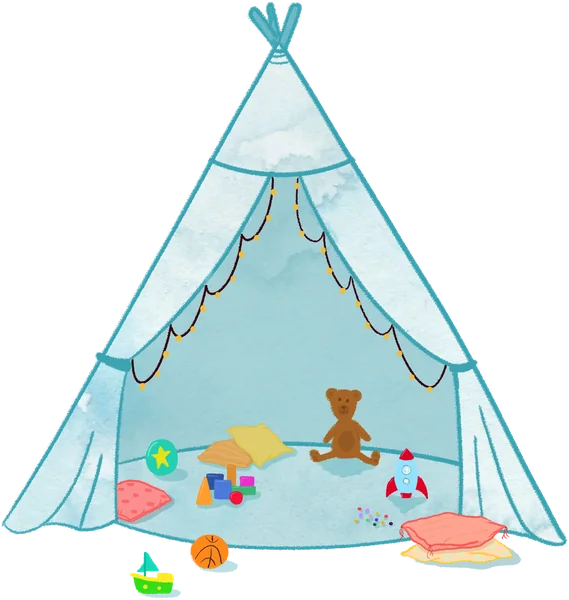 Make a calm-down cornerA cozy place like Foo's tent, at home or in a classroom, with a free kit to print.
 A feelings chart for kidsNine of Foo's faces, from sad and worried to calm and loved, and a cloud meter for how big a feeling is.
Free tonight
Tonight: a calm night with Foo
Foo's 7 Calm Nights are short calm-downs for bedtime, about two minutes each, with a gentle voice and a slow picture on a phone or tablet. Night one is free and opens right away. If your child likes it, we can email you the other six, one a night.
Open night one

Meet the book
Foo's Big Emotions
Our picture book · coming soon
Foo's friend Fall is leaving, and Foo is sad. A big, dark cloud fills his mind. Without meaning to, he hurts his friends, his dog and his sister, and then he hides in his tent.
There, with a few deep breaths, he finds his way back to calm. The next day he makes things right, and his friends show him how they calm down.
Foo and his friends on these pages all come from it. The book isn't out yet, but you can meet Foo tonight: night one of Foo's 7 Calm Nights is free.