Free kit to print · home and classroom · ages 3 to 8
Make a calm-down corner (like Foo's tent)
A small, cozy place your child chooses when a feeling gets too big, and never a punishment.
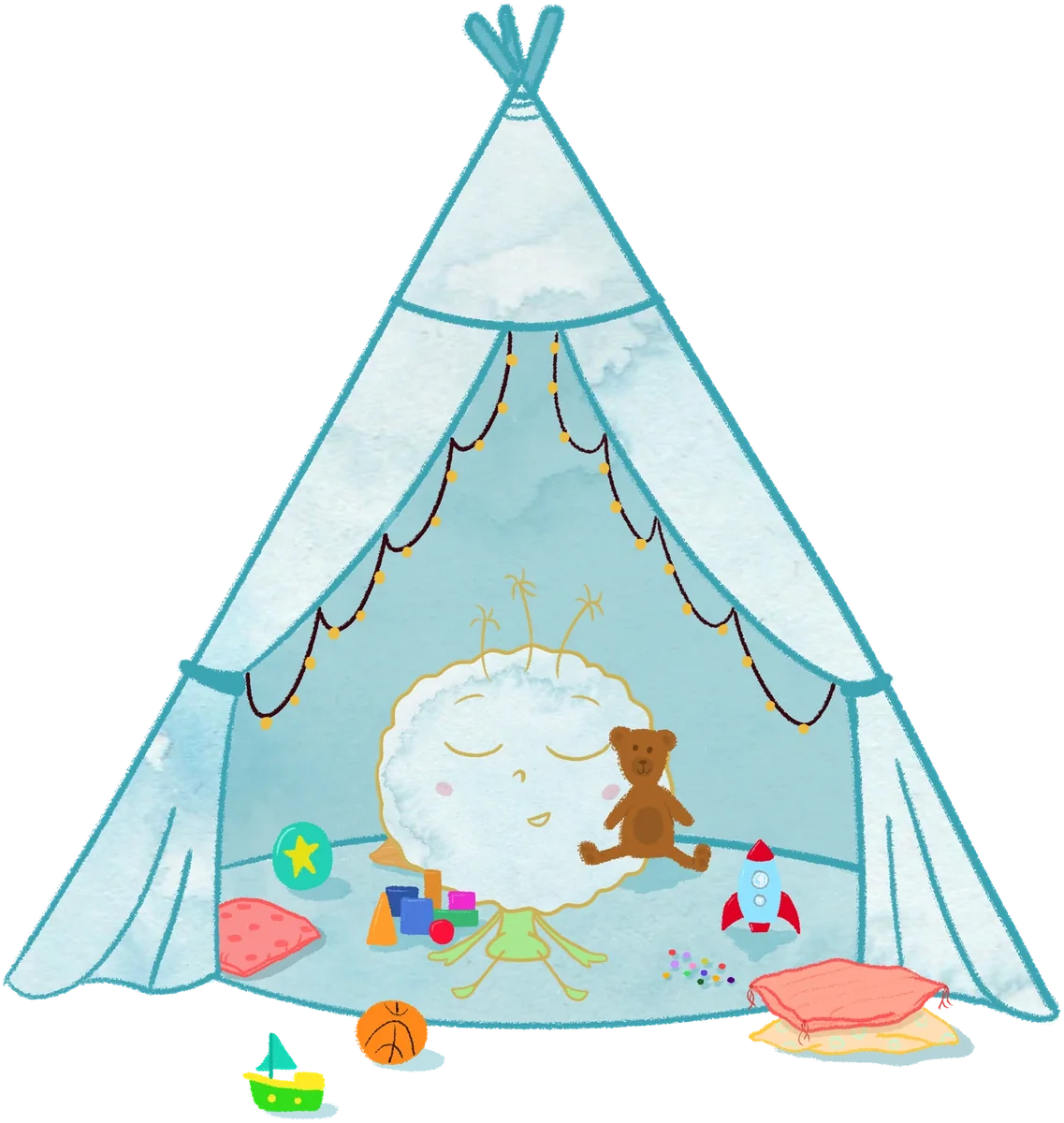
In our picture book Foo's Big Emotions, Foo hides in the tent he built with his friend Fall, takes a few deep breaths, and finds his calm again. Here's how to make a corner like that at home or in a classroom, with a free kit to print.
The quick answer
What is a calm-down corner?
A quiet, comfy spot where a child can go to let a big feeling pass, with a few calming things to do. Four things make it work:
It's cozy and small
It needs a soft place, a soft friend and a few calm ideas. A favorite chair or a basket of calming toys can be enough.
Learn the way on a calm day
Go there together when everyone is fine, so the way is easy to find on a hard day.
Your child chooses to go
Invite, never send: “Would the tent help?” A grown-up can come in too.
You stay close
Sit nearby, or go in together. When it's over, talk about what happened.
Sources: NCPMI; Action for Healthy Kids; Child Mind Institute
Print · free, no sign-up
The free calm corner kit
One file with everything for the corner: the door sign, the menu poster, the 16 calm-down cards, the “I feel...” check-in cards and the cloud meter. Or print the pieces one by one. US Letter and A4, color and black and white, no email.
Calm corner kit
Everything for a calm corner in one file: the door sign, the menu, the 16 cards, the check-in cards and the cloud meter.
9 pages · PDF
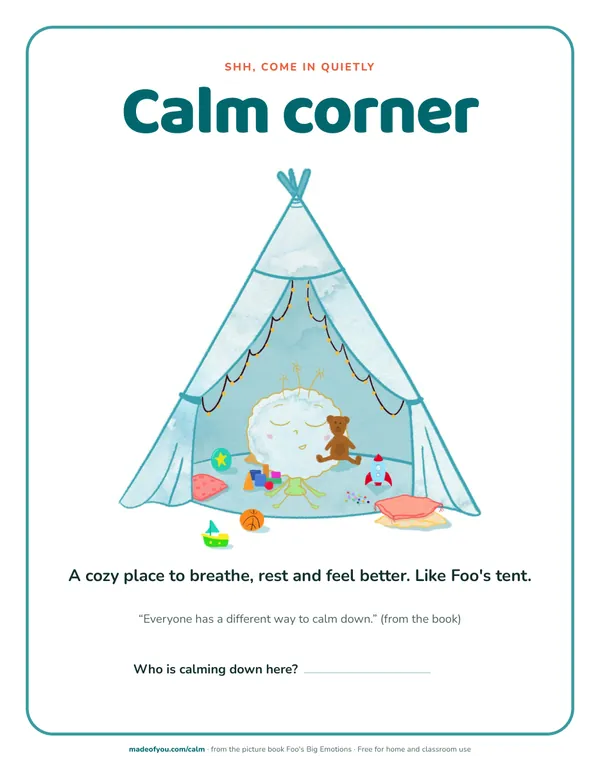
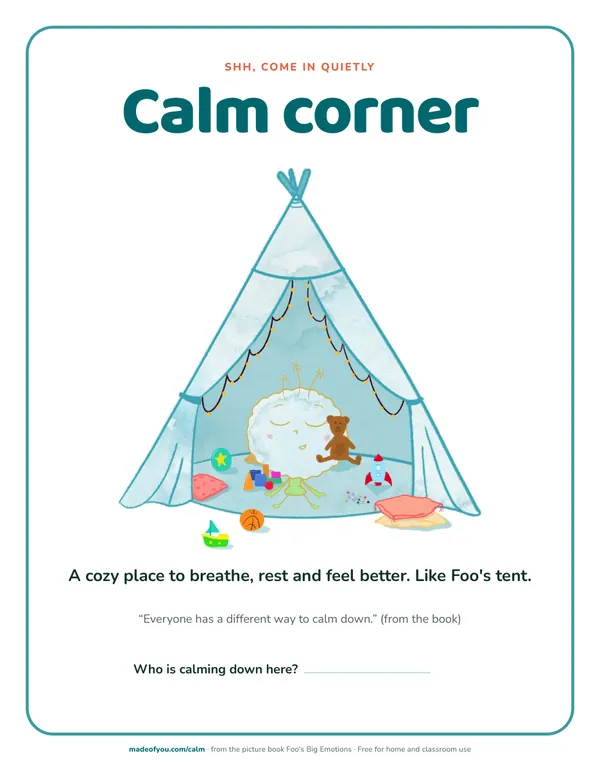
Calm corner door sign
Foo's tent on a sign for the door or the wall of your calm corner.
1 page · PDF
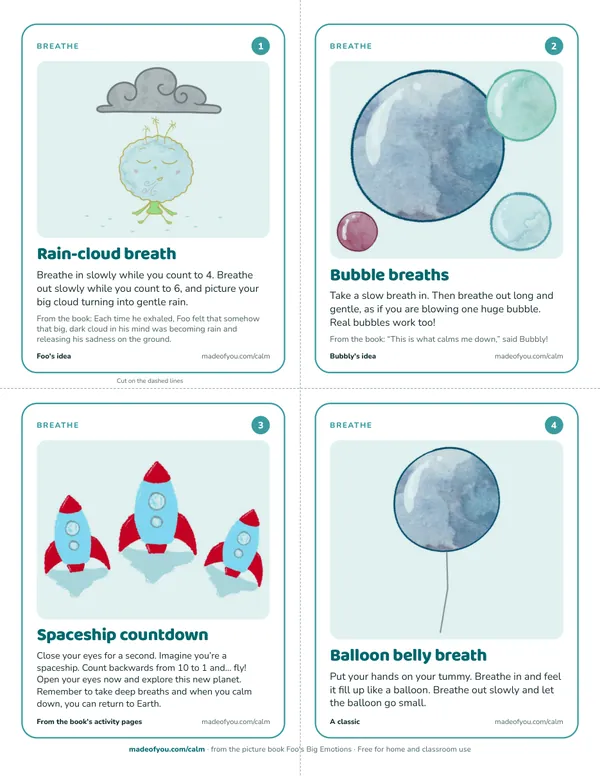
Calm-down cards
The 16 ideas of Foo and his friends, four to a page, with two blank cards for your child's own ideas. Cut on the dashed lines.
5 pages · PDF
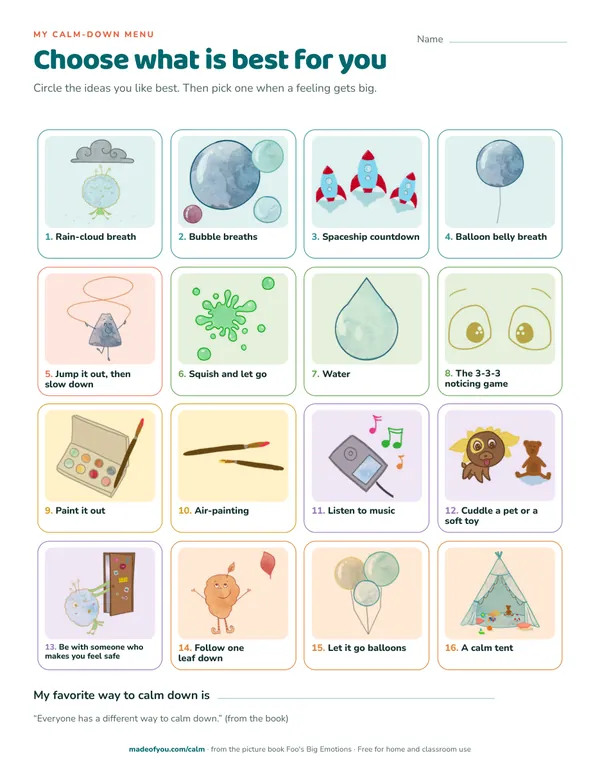
Calm-down menu poster
All 16 ideas on one page, under the book's own title: Choose what is best for you. Your child circles the favorites.
1 page · PDF
Free for home and classroom use. To pass them on, please share the link to this page and not the file.
From the story
What's in Foo's tent
On the day his friend Fall is leaving, Foo's sadness comes out all wrong. He argues with his friends, yells at his dog and fights with his sister. So he goes to the one place that feels safe: the tent he and Fall built together.
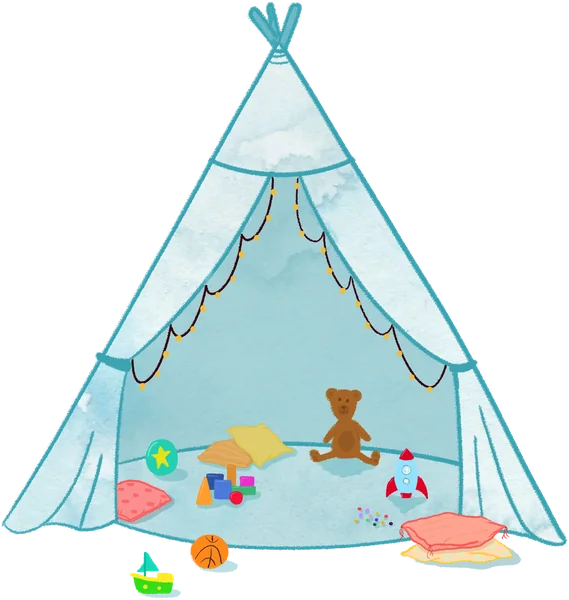
All his toys were there.
There, among his pillows, his toys and a soft teddy, he slows down:
He started taking a few deep breaths.
Your corner needs no more than Foo's: a place of its own, soft things, toys your child loves and a few slow breaths.
Calm-down corner ideas
What to put in your calm-down corner
Pick a few, not all of them. A corner with too much in it stops feeling calm.
Somewhere soft
A cushion, a beanbag or a folded blanket. A tent or a blanket over two chairs makes it feel like a hideout.
A soft friend
A teddy or a soft toy to hug, like the bear in Foo's tent.
The calm-down cards
Or the menu poster, at your child's eye level, so they can point to an idea without words.
Something to squeeze
Playdough, clay or a soft stress ball.
Paper and crayons
For painting a feeling out, or scribbling it.
A picture book or two
Something calm to look at. A story is a gentle way back to talking.
The cloud meter
“How big is my cloud?” on the wall: your child points to how big the feeling is.
The door sign
Foo's tent on a sign that says this is the calm corner. Shh, come in quietly.
Safety note. Playdough, clay or a soft stress ball are just right for squishing. We leave out homemade slime recipes on purpose.
Two versions
A calm corner at home, and in the classroom
At home
- A corner of the bedroom, the space behind the sofa, or a play tent.
- Let your child help set it up and choose what goes in. It's their place.
- You can go in too. For the little ones, a lap is often the calmest place there is.
- Keep it for calm and for fun: reading, cuddles, a quiet game. Never for punishment.
In the classroom
- A quiet spot away from the door and the busiest table, where you can still see in.
- A cushion, the calm-down cards, the menu poster and the cloud meter on the wall.
- Agree a few rules with the class: one child at a time, a few minutes, then back to the group.
- The calm pass lets a child ask for a break without words.
How to start
Practice there on calm days
Calming down is a skill, and the Child Mind Institute suggests practicing it when children are already calm. So visit the corner when everyone is fine. Read a book there, blow a slow pretend bubble, pick a favorite card.
Then on a hard day your child already knows the way, and you can say: “Would the tent help?”
The one rule
Their choice, never a punishment
A calm-down corner only works if it feels safe. NCPMI describes it as a place to let go of strong feelings, and Action for Healthy Kids is clear that it isn't a time-out or a punishment.
So invite, don't send. “Go to your corner” turns it into a time-out. A child can also choose to calm down right next to you, and that's fine.
An honest note. Calm corners are a recommended practice, not a studied one. We found no strong studies of calm-down corners on their own. What is better backed are the parts: practicing calm on calm days, and a grown-up who stays close.
For teachers · free, no email
A free calm corner kit for your class
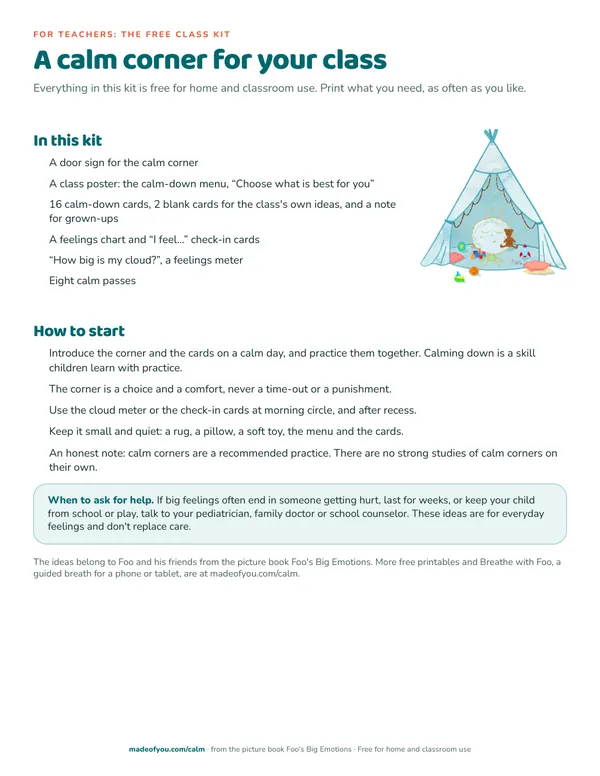
One file, 12 pages: a note for you on how to start, the door sign, the menu as a class poster, the 16 calm-down cards, the feelings chart, the check-in cards, the cloud meter and eight calm passes. It's free for classroom use, with no sign-up. For morning check-ins, see our feelings chart page.
Calm corner kit for teachers
The kit for one class, free: a note for you, the door sign, the menu poster, the cards, the feelings chart, the check-in cards, the cloud meter and calm passes.
12 pages · PDF
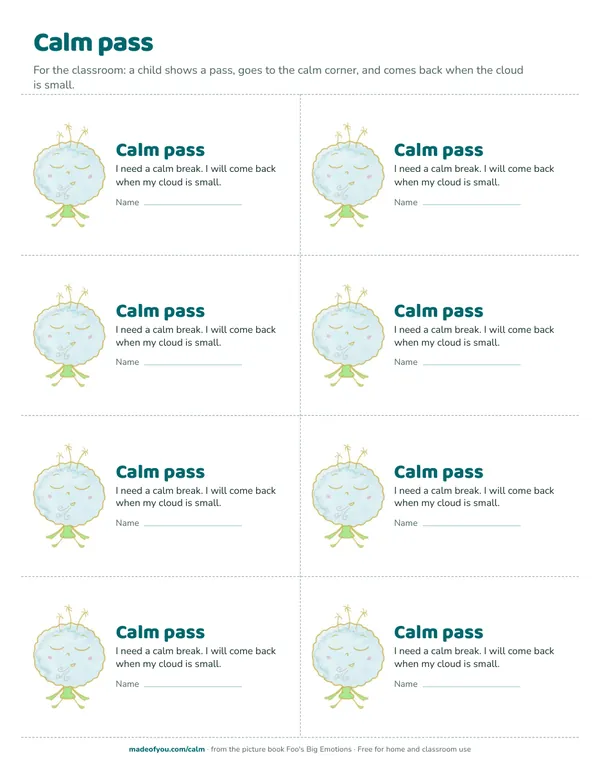
Calm pass
Eight passes for the classroom: show one, take a calm break, come back when the cloud is small.
1 page · PDF
In the kit
The 16 calm-down cards
Each card is one of the 16 ideas, from Foo and his friends and from the book's activity pages. See all 16 ideas, and how to do each one.







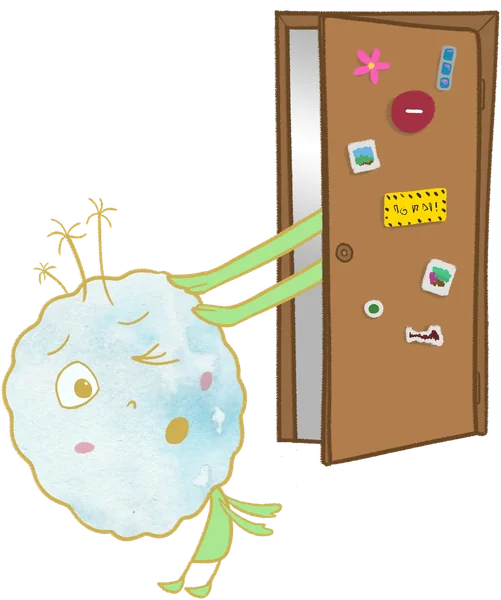

What the research says
What the sources say
These are the sources for the pieces a corner is made of.
A calm-down space should feel like a comfort, never a punishment. NCPMI describes a calm-down area as a place to let go of strong feelings: a favorite chair or a basket of calming toys can be enough. Action for Healthy Kids says plainly that a calm-down corner is not a time-out and not a punishment.
Calming down is a skill, and it's learned on calm days. The Child Mind Institute calls calming down a skill that can be taught, and suggests practicing relaxation skills when children are already calm, not in the middle of a storm.
Children learn to calm down through us. Harvard's Center on the Developing Child says we aren't born with the skills to manage our feelings and actions, only the potential to build them, through time with others and practice. The Child Mind Institute suggests showing children how you cope yourself.
Harvard Center on the Developing Child; Child Mind Institute, 2026
Feelings can be taught at school. A review of 213 school programs on social and emotional learning, with 270,034 students, found better skills and behavior, and better grades too. These were whole school programs, not a corner or a set of cards. CASEL describes these skills as knowing and managing your feelings.
For grown-ups
When to ask for help
If big feelings often end in someone getting hurt, last for weeks, or keep your child from school or play, talk to your pediatrician, family doctor or school counselor. These ideas are for everyday feelings and don't replace care.
If your child sees a therapist for sensory or other needs, their therapist can help you adapt these.
From HealthyChildren.org (American Academy of Pediatrics): temper tantrums; aggressive behavior
Questions
Grown-ups ask
What should I put in a calm-down corner?
You need something soft to sit on, something soft to hug and a few calm things to do, like the calm-down cards, a picture book, something to squeeze, paper and crayons. Keep it small. Foo's tent has pillows and his toys, and that's enough.
Can a calm-down corner be a tent?
Yes, and lots of children love that. Foo hides in the tent he built with his friend Fall. A play tent, a blanket over two chairs or a big cardboard box all work. Leave the door open so you can see in, and keep it safe for your child's age.
Is a calm-down corner the same as a time-out?
No. A time-out sends a child away. A calm-down corner is a place a child chooses, to feel better, and a grown-up can come too. Never send a child there as a punishment, or it stops feeling safe. NCPMI and Action for Healthy Kids say the same.
Do calm-down corners work?
Nobody has studied calm-down corners well on their own. They are a recommended practice, built from things that are better backed, like practicing calm on calm days and a grown-up who stays close. Try one for a few weeks and watch what your child does with it.
How do I set up a calm corner in a classroom?
Pick a quiet spot away from the door and the busiest table. Put in a cushion, the calm-down cards and the cloud meter on the wall. Introduce it to the whole class on a calm day, and agree together how long a break lasts and how a child comes back. The free class kit has a note for you, a door sign, the menu poster, the cards and calm passes.
What if my child won't use it?
That's fine. Spend time there together on easy days, reading or playing, so it feels like a nice place. Some children calm down best right next to you, on your lap or beside you on the sofa, and that counts too. If big feelings often end in someone getting hurt, see When to ask for help.
More calm-down pages
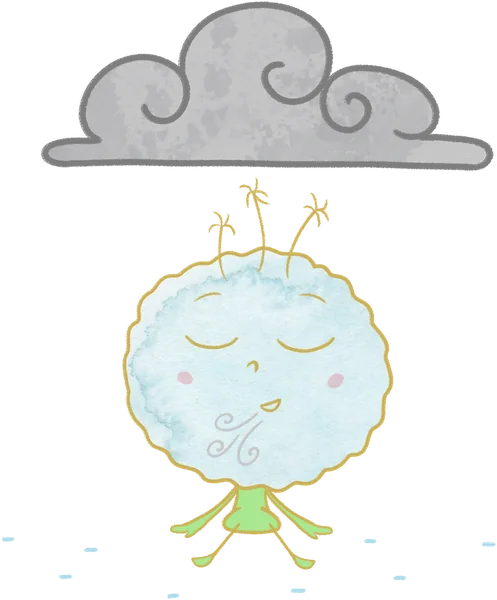 Calm-down ideas for kids16 ideas from Foo and his friends, from bubble breaths to a cozy tent, with free cards to print.
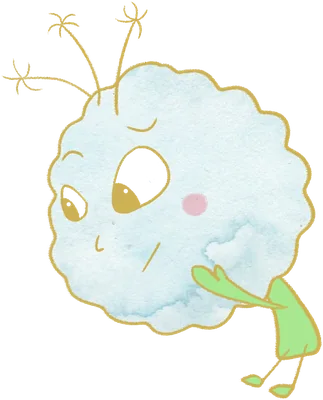 A feelings chart for kidsNine of Foo's faces, from sad and worried to calm and loved, and a cloud meter for how big a feeling is.
 Breathing exercises for kidsBreathe along with Foo, and eight calm breaths to try, each one 4 counts in and 6 counts out.
Free tonight
Tonight: a calm night with Foo
Foo's 7 Calm Nights are short calm-downs for bedtime, about two minutes each, with a gentle voice and a slow picture on a phone or tablet. Night one is free and opens right away. If your child likes it, we can email you the other six, one a night.
Open night one
Meet the book
Foo's Big Emotions
Our picture book · coming soon
Foo's friend Fall is leaving, and Foo is sad. A big, dark cloud fills his mind. Without meaning to, he hurts his friends, his dog and his sister, and then he hides in his tent.
There, with a few deep breaths, he finds his way back to calm. The next day he makes things right, and his friends show him how they calm down.
Foo and his friends on these pages all come from it. The book isn't out yet, but you can meet Foo tonight: night one of Foo's 7 Calm Nights is free.